Dordogne is a department in the Nouvelle-Aquitaine region of southwestern France, renowned for its stunning landscapes, prehistoric caves, and medieval châteaux. The region is famous for its gastronomic traditions and the scenic Dordogne River valley.
Browse Dordogne campsites La Roque-Gageac, Dordogne, France Photo by Jametlene Reskp on UnsplashDordogne is one of France's most historically significant regions, containing some of the world's most important prehistoric sites including the Lascaux caves dating back 17,000 years. The area was heavily influenced by both French and English rule during the Hundred Years' War, with numerous fortified settlements built during this period.
A regional train that follows the Dordogne valley for much of its route, passing vineyards, riverside villages and limestone cliffs before terminating near Sarlat-la-Canéda, gateway to the Périgord Noir.
Cuts through the heart of the Dordogne département, linking the prefecture Périgueux with the Lot valley and giving good access to smaller Périgord towns without a car.
This waymarked trail crosses the Périgord region, passing near the Vézère valley's prehistoric sites and rolling farmland; can be walked in shorter day sections.
North-south GR route that traverses Périgord Vert and Périgord Noir, taking in oak woodland, chestnut groves and stone-built hamlets.
One of the historic French routes to Santiago de Compostela runs through Périgueux and southern Dordogne, following old pilgrim paths and Romanesque churches.
A network of local footpaths linking Les Eyzies, prehistoric cave sites and troglodyte villages along the Vézère river cliffs.
A signposted cycle-touring route that follows the Dordogne River, largely flat and family-friendly in places, linking villages like Souillac-area, Beynac and the river valley towns.
A converted former railway line turned greenway, traffic-free and suitable for families, running through Périgord Noir countryside.
A beautifully preserved medieval and Renaissance town with honey-coloured stone buildings, a lively Saturday market, and a hub for exploring Périgord Noir.
A village built into a cliff face directly above the Dordogne River, best seen from a canoe or gabare boat trip.
A hilltop bastide town with panoramic views over the Dordogne valley and an underground cave network beneath its main square.
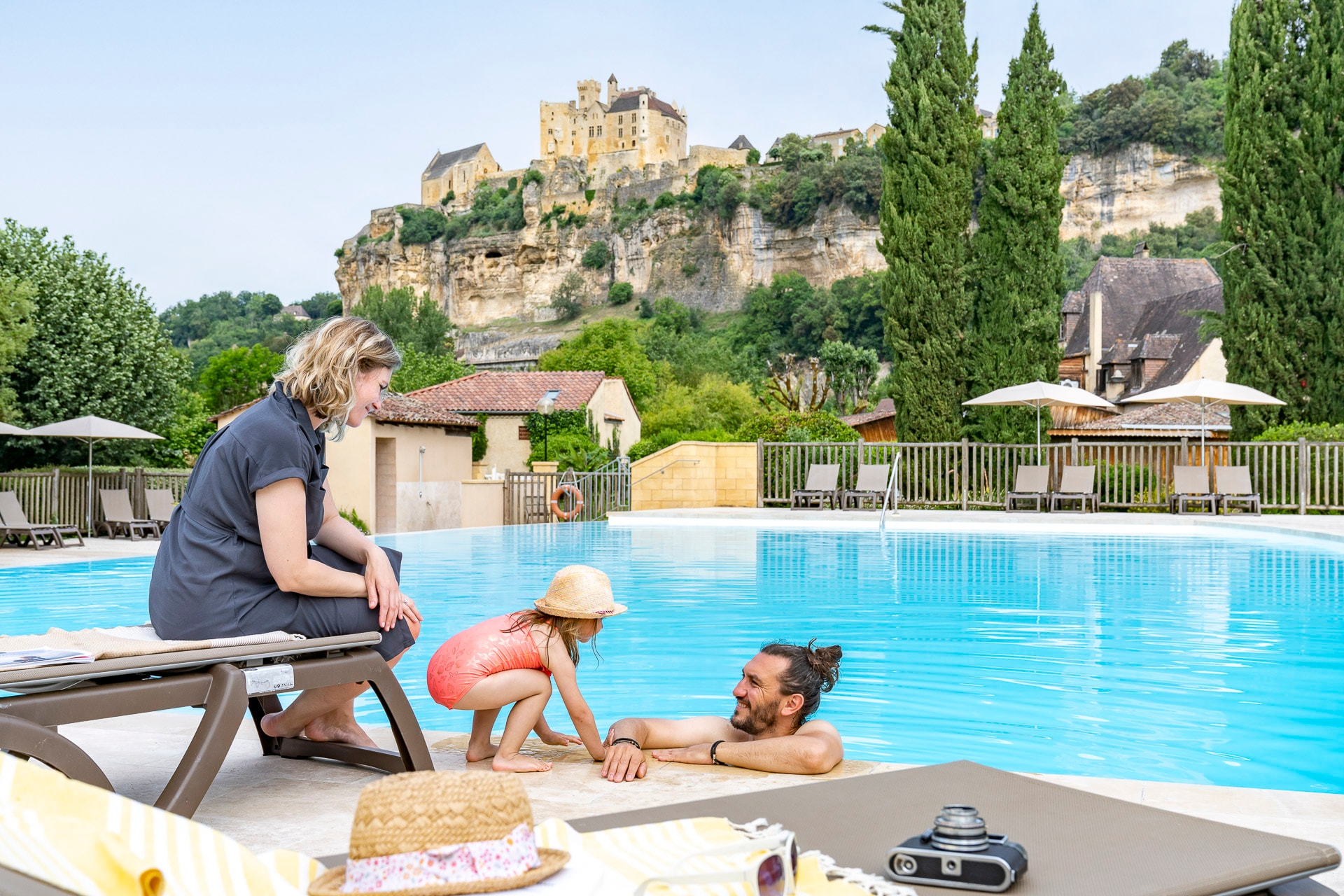
A dramatic clifftop village dominated by its medieval Château de Beynac, one of the best-preserved fortresses overlooking the river.
One of France's best-preserved bastide (fortified market) towns, with an arcaded central square dating to the 13th century.
Paddle beneath castles and cliffside villages between towns like Vitrac, La Roque-Gageac and Beynac — one of the classic ways to see the valley.
See prehistoric painted caves and replicas such as Lascaux IV and Font-de-Gaume, plus the National Museum of Prehistory at Les Eyzies.
Tour fortresses like Château de Beynac, Château de Castelnaud and Château des Milandes, many perched above the river valley.
Winter markets in Sarlat and other Périgord towns sell Périgord black truffles and local foie gras direct from producers.
Explore fortified medieval market towns such as Monpazier or Domme, laid out on a grid with arcaded squares.
Dordogne cuisine, often called Périgord cooking, is rich and centred on duck and goose: expect foie gras, confit de canard and magret de canard on most menus. The region is one of France's top producers of black truffles (truffes du Périgord), sold at winter markets, and of walnuts, used in oils, cakes and salads. Pommes de terre sarladaises (potatoes fried in duck fat with garlic and parsley) are a local classic, alongside wild cèpes mushrooms in autumn. Périgord strawberries are well regarded, and the vineyards around Bergerac and Monbazillac produce both dry reds and famous sweet dessert wines worth pairing with foie gras.
A UNESCO World Heritage listing covering 15 prehistoric sites, including Lascaux, around Les Eyzies-de-Tayac, recognised for some of the earliest known human art.
A regional nature park straddling northern Dordogne and Haute-Vienne, protecting rolling bocage, chestnut forests and traditional villages, with waymarked walking and cycling routes.
The medieval château above the village of Beynac-et-Cazenac features in the opening of Chocolat (2000), as Vianne and Anouk arrive in their fictional Dordogne village.
An internationally known mime and physical theatre festival held in Périgueux, usually late July/early August, with street performances across the old town.
A long-running summer theatre festival held in Sarlat-la-Canéda's historic streets and squares, typically in July.
Weekly truffle markets run in towns such as Sarlat and Sainte-Alvère from around December to March, where growers sell fresh Périgord black truffles.